How pivot doors work
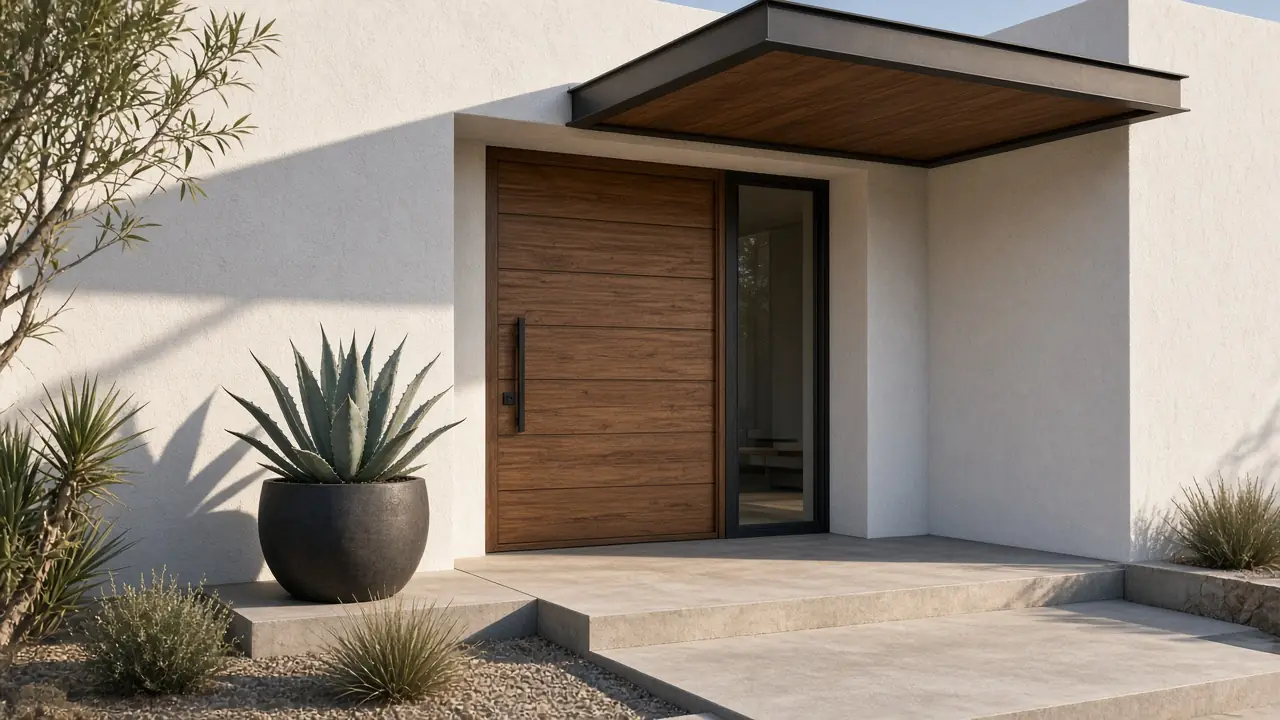
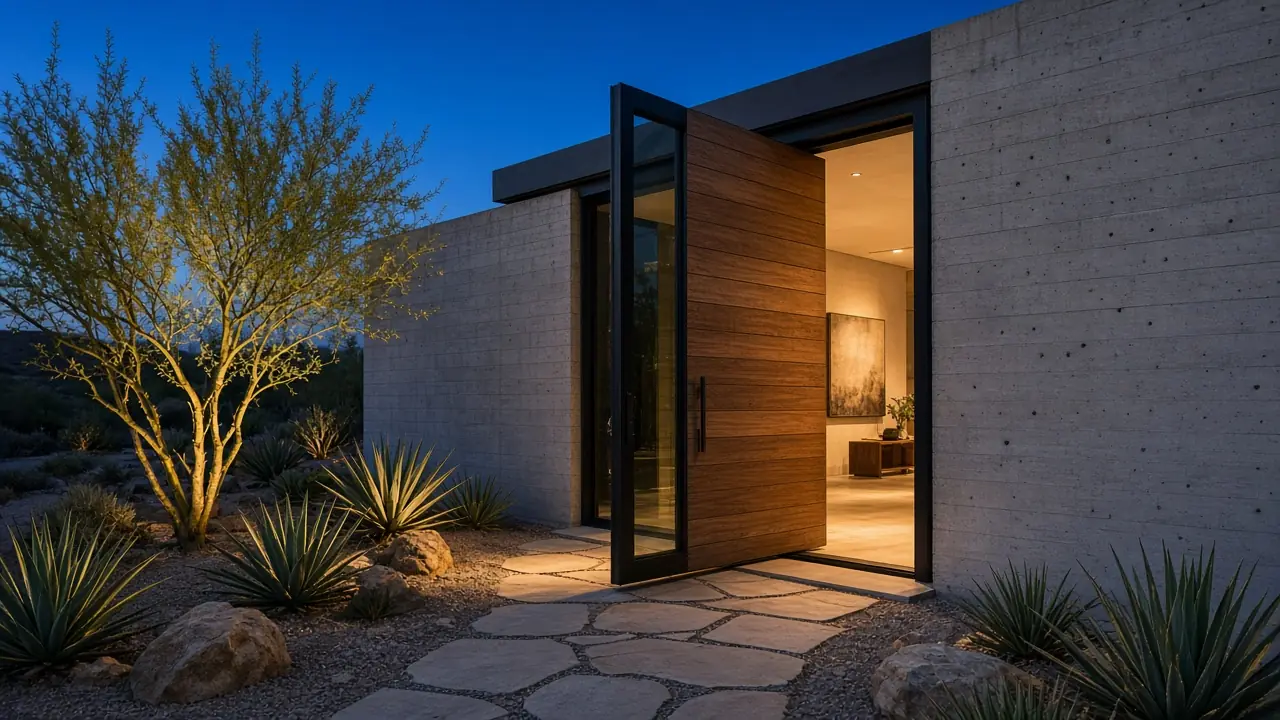
A pivot door rotates on a pin set into the floor and head rather than on side hinges, usually offset from the edge. That lets the door be much wider and taller than a typical hinged door. Because of the size and weight, the floor, header, and threshold have to be planned carefully.
Sun, heat, and finish
- Front doors facing west or south can get extremely hot. Fiberglass, thermally broken aluminum with glass, and properly finished wood under a deep overhang are common choices.
- Large glass panels in an entry door must be safety glass and benefit from Low-E coatings.
- Dark finishes absorb more heat; ask about finishes rated for desert exposure.
- Weather seals on a pivot door differ from hinged doors; ask how the door seals against dust and wind.
What the estimate should address
Pivot and custom entry doors are built to order, so a clear written scope matters:
- The exact door: brand or maker, material, size, pivot offset, and swing direction
- Glass: safety glazing and the Low-E coating for any glass panels or sidelites
- Hardware: the pivot hardware, any closer or speed control, the lock and handle set, and the finish
- Opening work: whether the opening, header, or floor needs changes for the pivot, and who handles the permit if it does
- Threshold and seals: how the door seals at the pivot side, top, and threshold against dust and wind
- Finish: the factory finish, how it is rated for sun exposure, and any refinishing schedule for wood
- Removal and disposal of the old door, and any stucco, trim, or paint work around the opening
- Warranties and schedule: product and workmanship warranties, build lead time, and install duration
HOA guidelines
Front doors are visible from the street, so they are one of the items design review committees look at most closely. Many communities have guidelines on colors and styles; check yours before choosing a dramatic change.