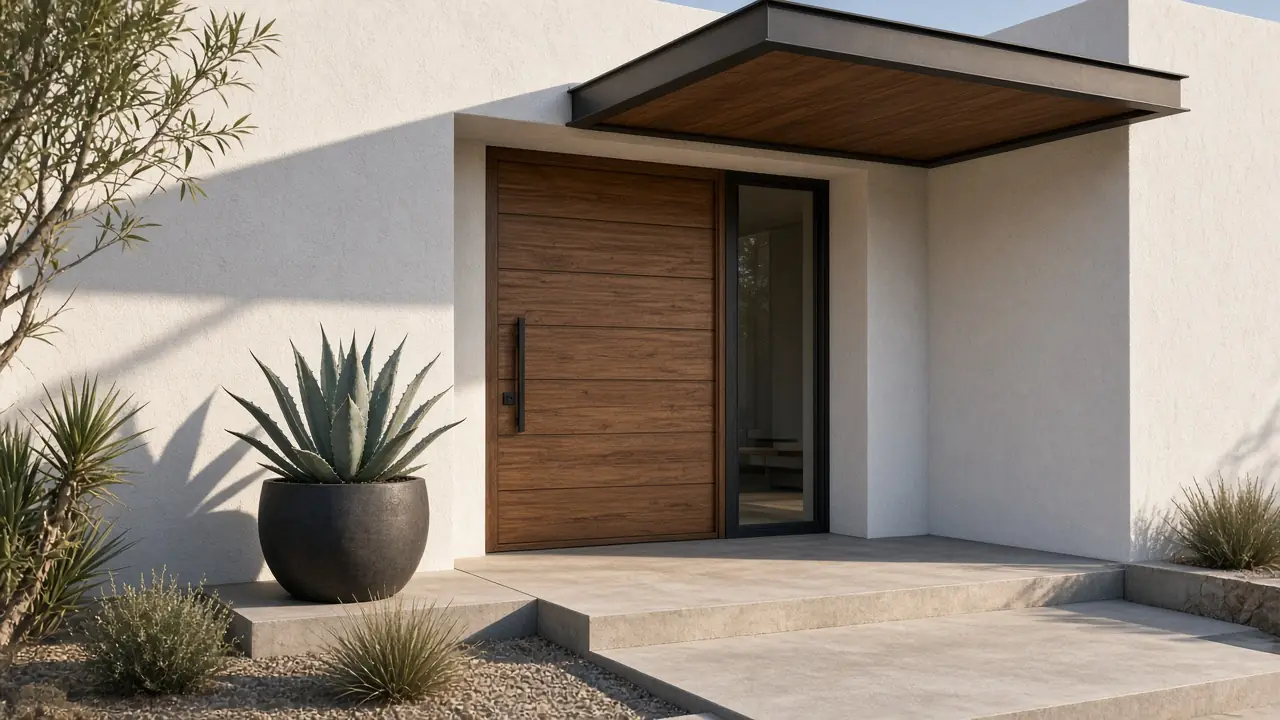
Types of exterior doors
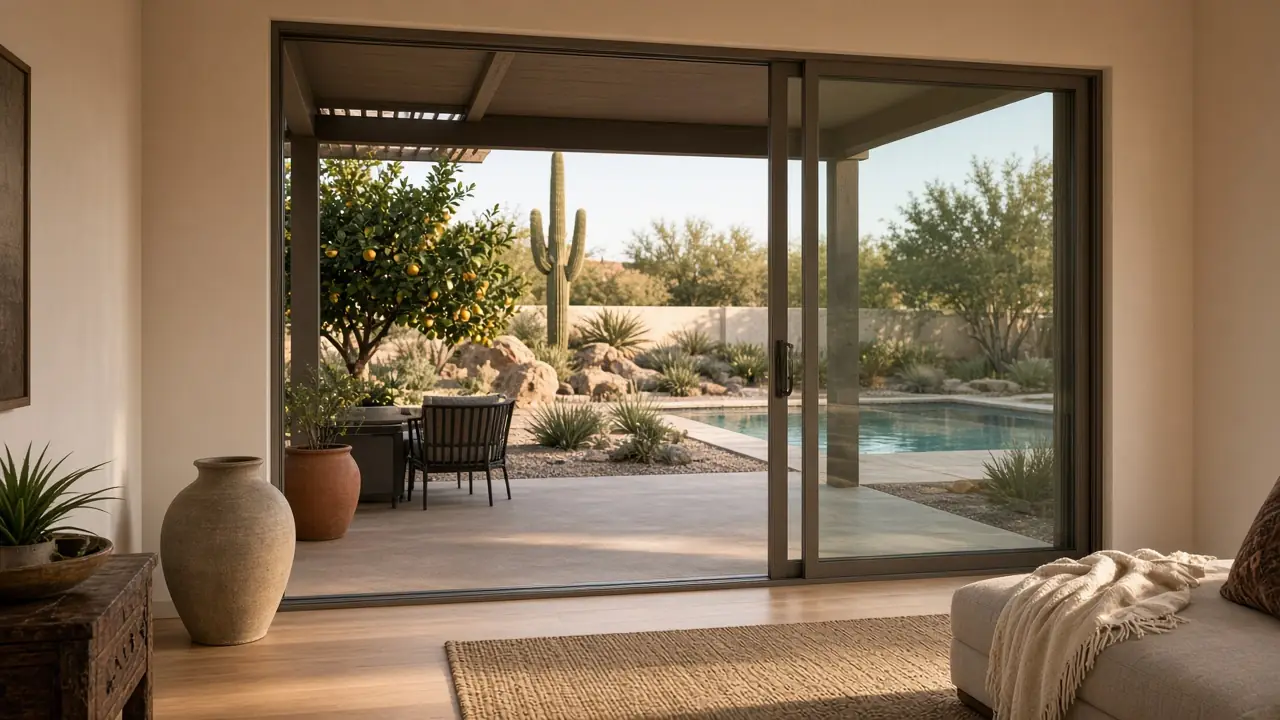
- Sliding and patio doors
- Multi-slide and pocket doors
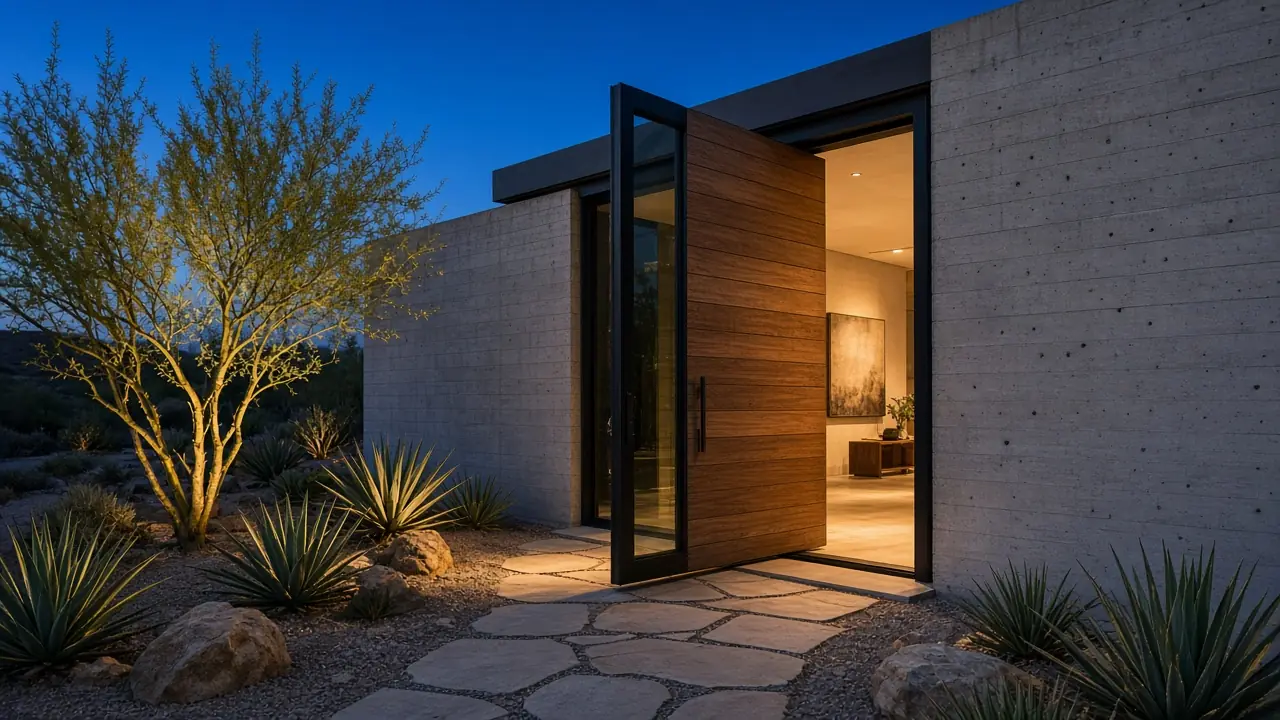
- Pivot and entry doors
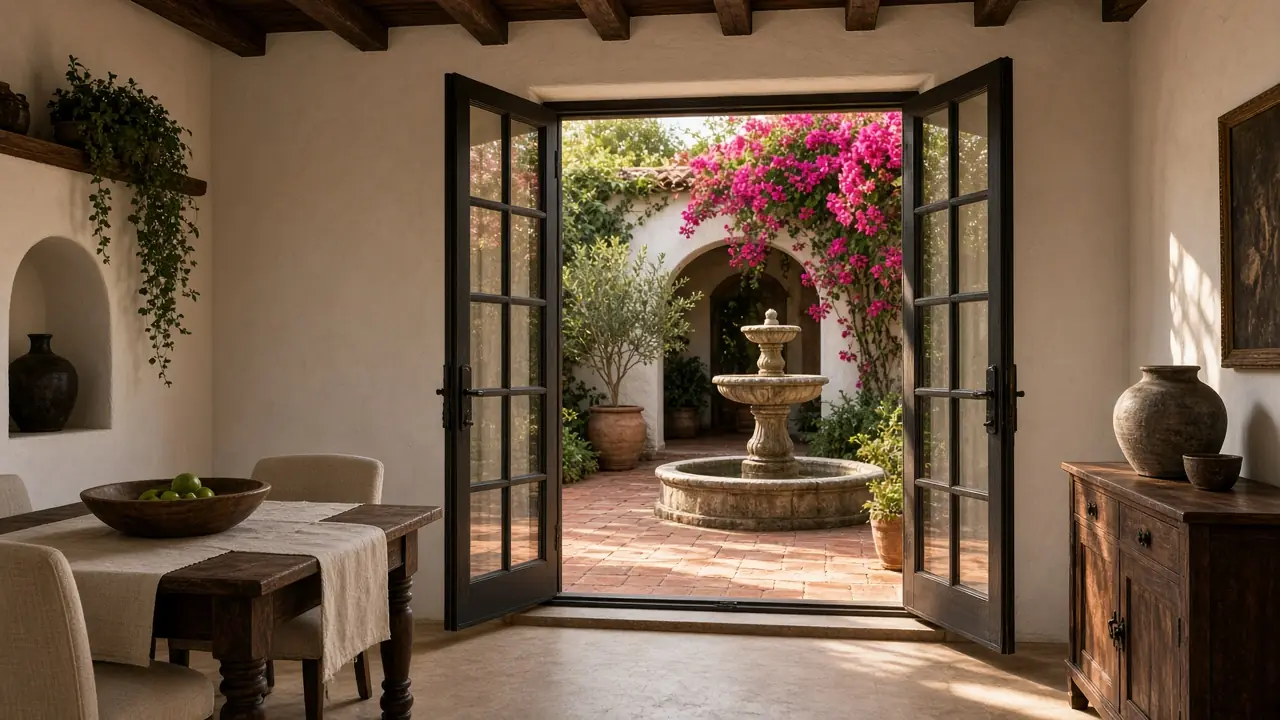
- French and hinged patio doors
- Bifold / folding doors
Materials in desert exposure
- Fiberglass: stable under temperature swings and can mimic wood grain. A common choice for sun-exposed entries.
- Steel: strong and secure, but surfaces can get very hot in direct sun and need a durable finish.
- Aluminum (thermally broken): slim frames for modern glass doors; the thermal break limits heat transfer through the frame.
- Wood: beautiful, but needs a deep overhang and regular refinishing when exposed to Arizona sun.
Whatever the material, ask about the threshold, sill drainage, and weatherstripping. Those details decide whether dust and monsoon rain stay outside.
Sun, overhangs, and color
How much sun a door gets matters as much as what it's made of. JELD-WEN's door protection chart recommends that south- and west-facing doors in desert climates have an overhang about twice as deep as the height from the threshold to the overhang, and north- or east-facing doors about half that. It also notes that a sun-exposed door face can get well above 120 degrees and suggests lighter colors for unprotected doors, and it warns that heat can build up behind a storm door in hot climates.
Finishing can affect the warranty too: Therma-Tru, for example, requires its fiberglass doors to be finished within 6 months of installation. For a full comparison, see our guide: What's the best front door for Arizona sun?
Glass in doors
Glass in and near doors is required by building codes to be safety glazing (tempered or laminated). Glass doors facing west or south should use a hot-climate Low-E coating, just like windows.